The Test
Eight observations. Yes or no.
What this is built on
The test uses the same framework that dog–human attachment research uses. Bowlby (1969) and Ainsworth (1969) named four behaviors that show whether one being is bonded to another. Topál, Miklósi, Csányi, and Dóka (1998) showed that the same four behaviors apply to dogs and owners. Palmer & Custance (2008) and Prato-Previde et al. (2003) replicated it.
The four pillars:
- Proximity seeking — the dog wants to be near you.
- Secure base — the dog explores from you, and depends on you in new places.
- Safe haven — the dog moves toward you when something is wrong.
- Reunion — the dog greets you specifically when you return.
This method adds a fifth pillar: you as a reward. Your presence and praise are worth more than food from a stranger (Skinner, 1938 — secondary reinforcer). This is the working definition of love this site uses. Read the Philosophy.
How to take it
Each pillar is tested at two depths — a basic form and a deep form. Eight levels total. Higher levels need new places, real stress, and real strangers to be tested at all. Do not stage stress on purpose. Wait for the situation to come up naturally.
Do not coach the dog. Do not hold food. A "yes" only counts if the dog does it more than half the times the situation comes up. Take the test once a month.

Level 1Proximity seeking
Voluntary proximity
A calm room at home. You sit and read. The dog has free run of the house. No food.
Does the dog settle within an arm's length of you, more often than away from you?
Topál et al., 1998 — proximity is the most basic attachment indicator.
Level 2Proximity seeking · deep
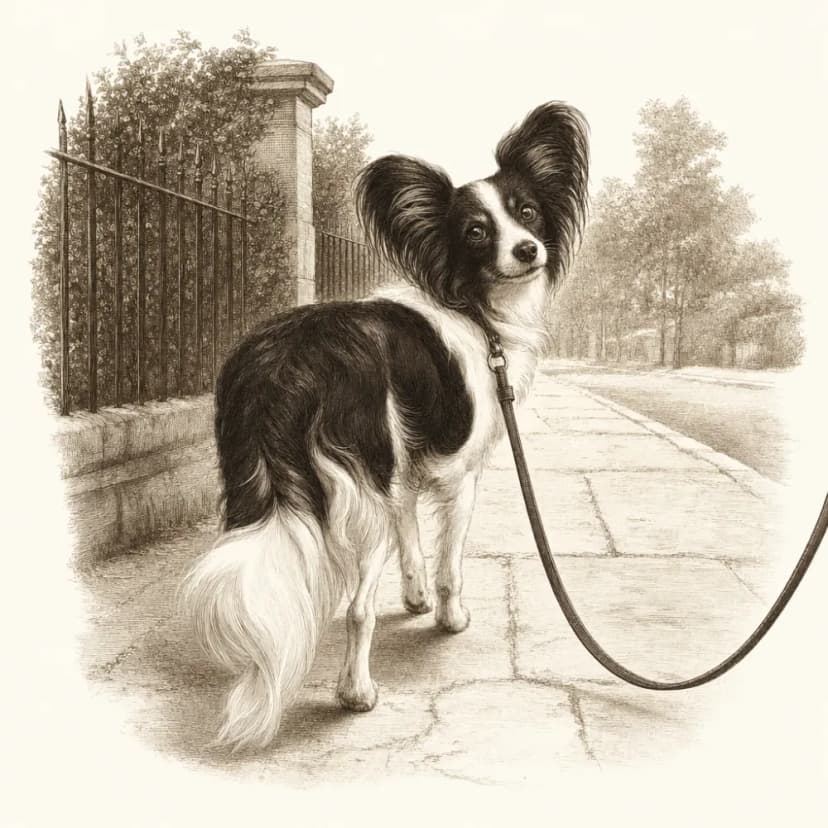
Walk check-in
A normal walk on a leash, mild distractions. You do not call the dog or say its name.
Does the dog look back at your face on its own, more than once during the walk?
Prato-Previde et al., 2003 — sustained orientation to the owner across distractions.
Level 3Secure base
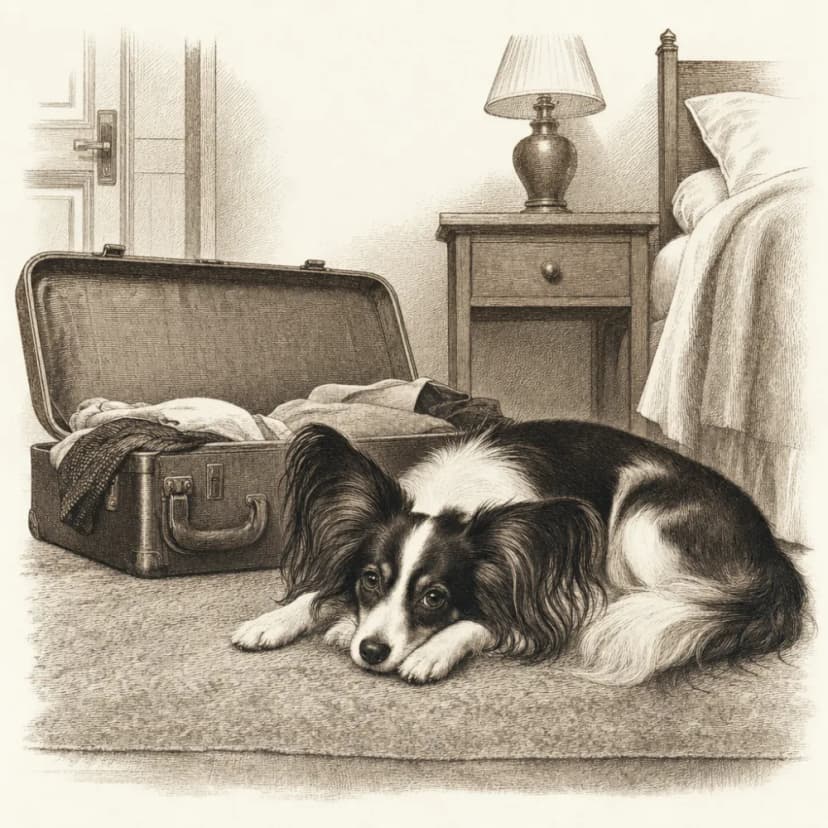
Settles in a new place with you
A friend's home, a quiet café, a new park bench. First visit.
Within five minutes, does the dog lie down within an arm's length of you and stay there?
Ainsworth's strange situation; Topál et al., 1998 — the owner anchors exploration.
Level 4Secure base · deep
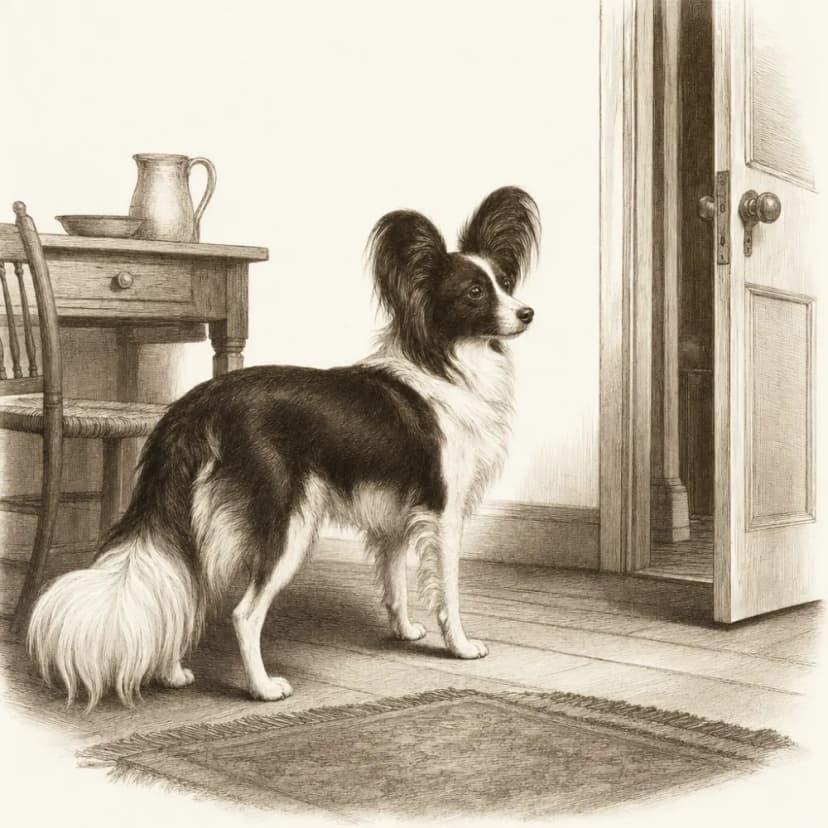
Hesitates when you step away in a new place
The same new place. You step out of sight for thirty seconds.
Does the dog stop, orient toward where you went, and wait or follow — without panic and without ignoring?
Palmer & Custance, 2008 — secure-base effect requires the owner specifically.
Level 5Safe haven
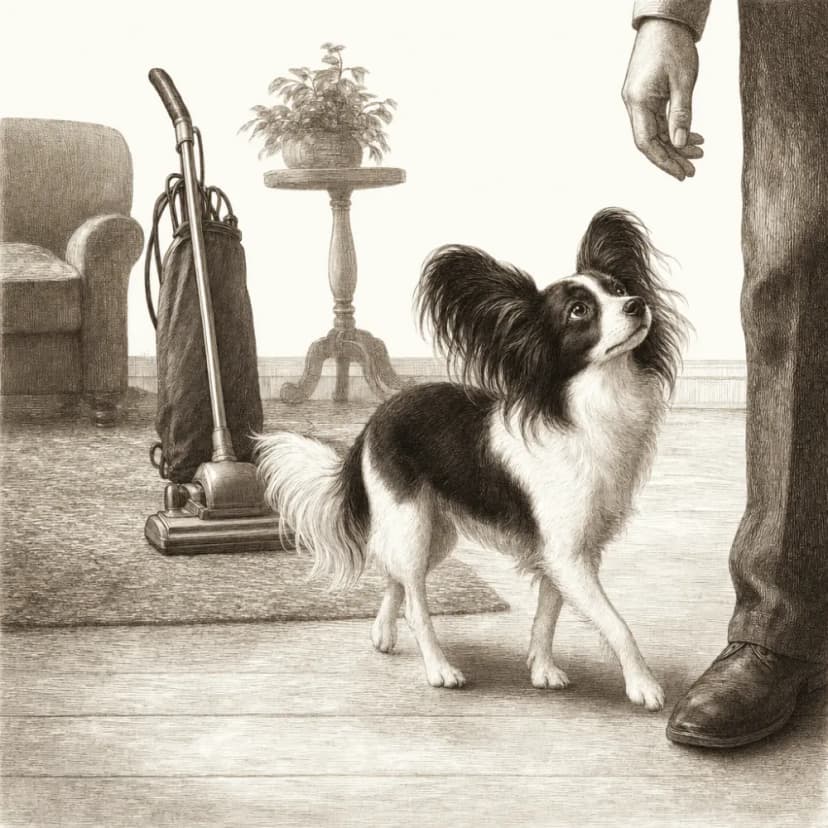
Moves toward you in a small startle
A small everyday startle: a doorbell, a vacuum starting, a dropped pan. You are nearby. No coaching.
Does the dog move toward you, rather than toward the noise or away alone?
Bowlby, 1969 — safe-haven response under mild stress; classical attachment marker.
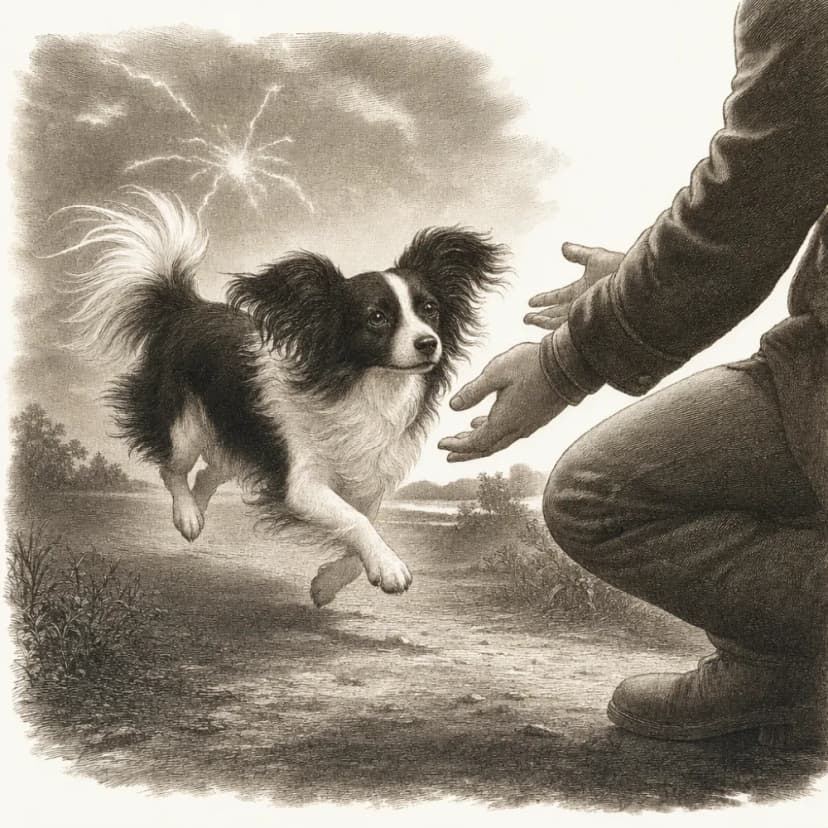
Level 6Safe haven · deep
Seeks you in real fear
A genuine startle: thunder, fireworks, a near-injury, a real threat. Do not stage this. Wait for it to happen.
When the dog is truly afraid, does it move toward you — rather than away or to a hiding place alone?
Palmer & Custance, 2008 — distress-driven proximity is the strongest single attachment indicator.
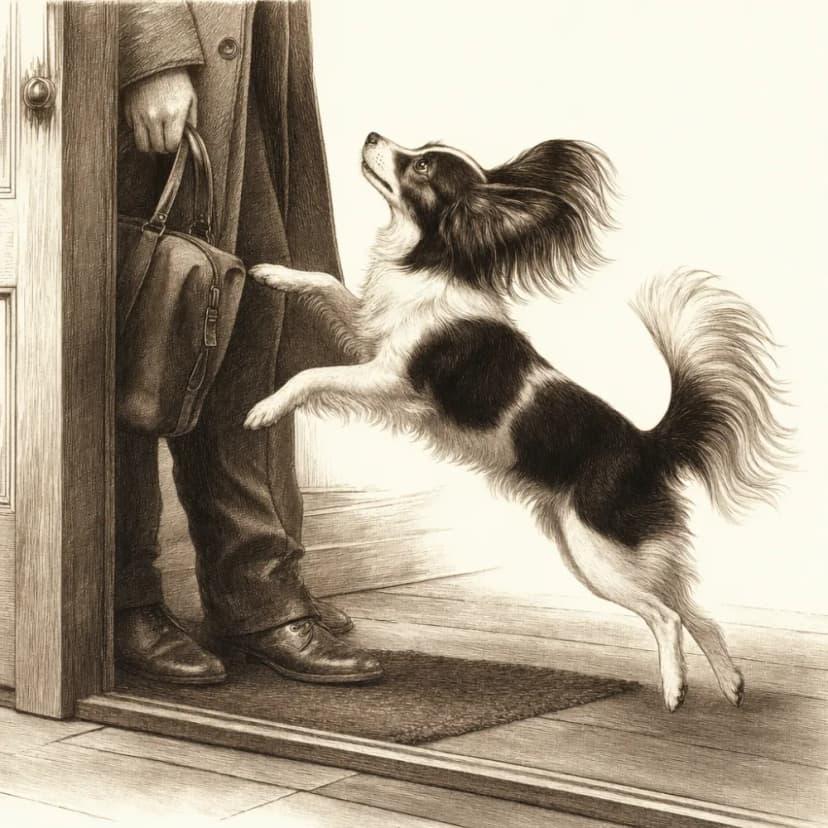
Level 7Reunion · deep
Specific greeting on your return
You come home or step back into the room after even a short absence. Other people may be present.
Does the dog come to you first, ahead of others or the door, and greet you with focused attention?
Topál et al., 1998 — reunion behavior is the canonical attachment test.
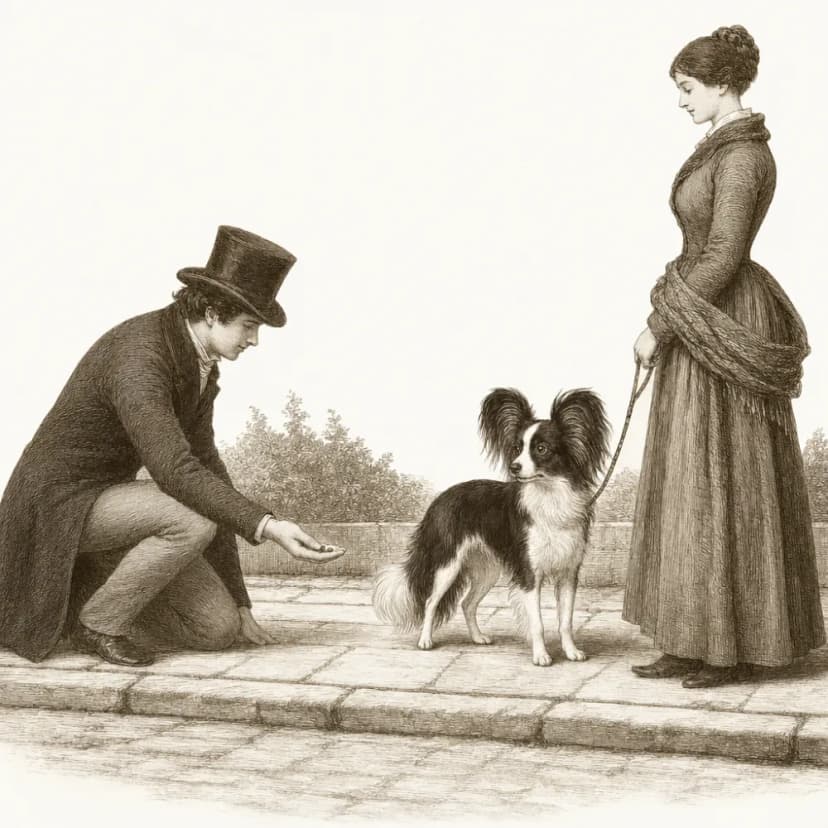
Level 8You as a reward · deep
You over a stranger's treat
A calm helper offers a small treat to the dog from one meter away. You stand on the opposite side and praise the dog with a normal voice.
Does the dog come to you instead of taking the treat?
This method's signature test — your value as a secondary reinforcer exceeds primary food reward (Skinner, 1938).
How to read your level
- Levels 1–2: focus on Feeding and Play. Build value at home first.
- Levels 3–4: focus on Walking and Manners. Take the bond outside.
- Levels 5–6: train under distraction and in new places. Grooming under choice helps too.
- Levels 7–8: trust under stress. Cannot be rushed. Wait for natural chances.
Sources
- Ainsworth, M. D. S. (1969). Object relations, dependency, and attachment: A theoretical review of the infant–mother relationship. Child Development, 40, 969–1025.
- Bowlby, J. (1969). Attachment and Loss, Vol. 1: Attachment. Basic Books.
- Topál, J., Miklósi, Á., Csányi, V., & Dóka, A. (1998). Attachment behavior in dogs (Canis familiaris): A new application of Ainsworth's (1969) Strange Situation Test. Journal of Comparative Psychology, 112, 219–229.
- Prato-Previde, E., Custance, D. M., Spiezio, C., & Sabatini, F. (2003). Is the dog–human relationship an attachment bond? An observational study using Ainsworth's strange situation. Behaviour, 140, 225–254.
- Palmer, R., & Custance, D. (2008). A counterbalanced version of Ainsworth's Strange Situation Procedure reveals secure-base effects in dog–human relationships. Applied Animal Behaviour Science, 109, 306–319.
- Skinner, B. F. (1938). The Behavior of Organisms. Appleton-Century-Crofts.