Principles
Three rules. Apply them in every daily activity.
1. Bonding is the gateway
Before any primary reward, the dog interacts with you.
A primary reward is anything the dog wants by nature: food, water, the smell of a tree on a walk, a toy, going through a door.
Most owners give these freely. The dog gets them without paying attention to the owner. So the owner does not become more valuable.
The fix: put yourself in front of the reward. Small interactions only.
Examples:
- Food. Hand-feed meals one piece at a time. The dog eats by being near you, looking at you.
- Walking. When the dog pulls toward a smell, stop. Wait. When the dog looks at you or comes back, walk to the smell together.
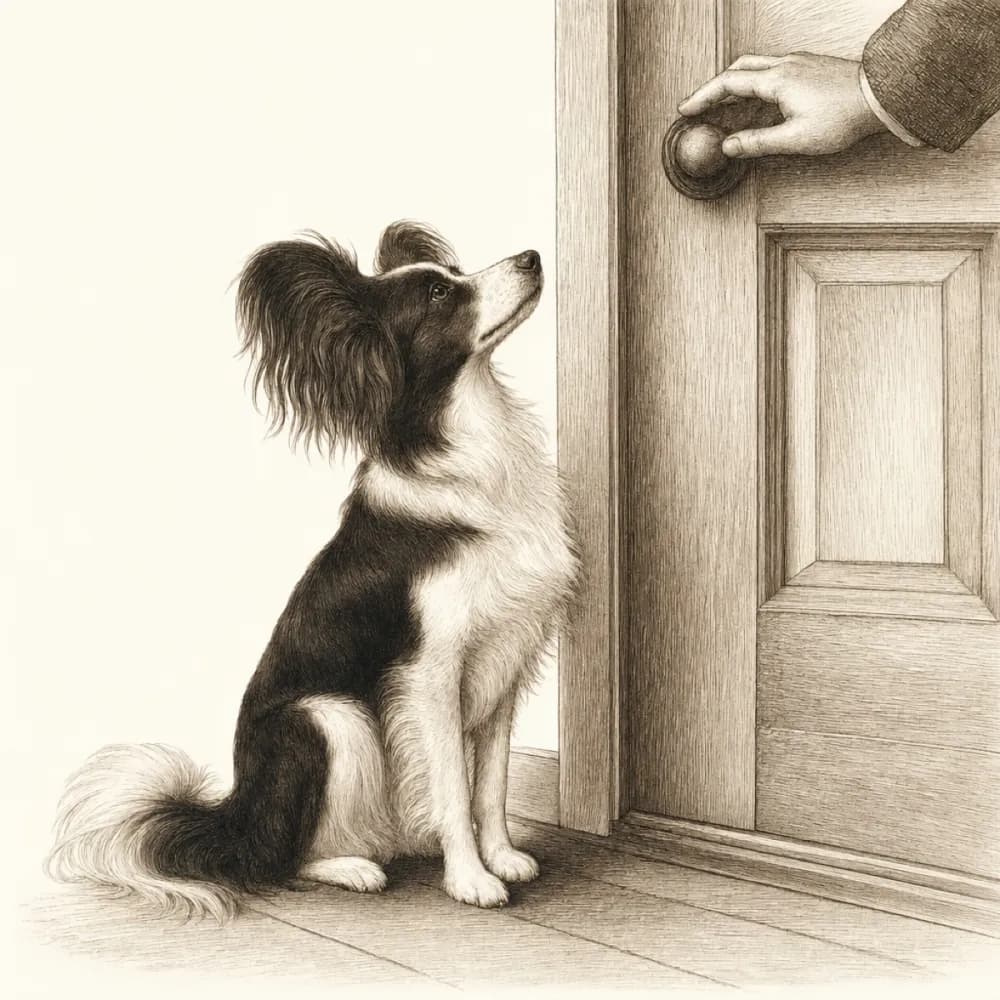
- Door. Before the door opens, the dog sits or looks at you. Then the door opens.
- Play. You start the game. You end the game. The dog asks you, not the toy.
Start small. Add steps over time. Do not block the reward — gate it.
2. The dog chooses
The dog must be able to choose. Even when you want a behavior, the dog should choose to do it.
This sounds slow. It is not. A dog that chooses learns faster and remembers longer than a dog that is forced.
How to apply:
- Wait. Do not lure with food. Do not push or pull the body.
- Make the right choice easy. Make the wrong choice harmless but with no reward.
- When the dog chooses well, the reward happens.
- When the dog chooses something else, nothing happens. No anger. No food. Try again later.
For things the dog does not like (nail trims, baths), still let the dog choose. Stop when the dog says stop. Try again. The dog learns it is safe to participate.
A dog that knows it can leave will stay longer.
3. Rules over praise and punishment
Praise and punishment are loud signals. They wake the dog up. They do not always teach.
Rules are quiet. The dog learns them by repetition. After a while the dog does not think about them. They are how life works.
You live by many rules without thinking. You stop at red lights. You wait in line. You eat with utensils. Nobody praises you for these. Nobody punishes you. They are the shape of the day.
Your dog can have the same kind of rules.
How to set a rule:
- Pick one behavior. Make it specific. "Sit before the door opens."
- Apply it every time. No exceptions.
- If the dog does not do it, the next thing does not happen. The door stays closed.
- Repeat for one to two weeks. The rule sets in.
- Do not praise it after it is set. It is now the floor, not a trick.
A house with three to five clear rules is calmer than a house with constant praise and correction.
How the principles fit together
- Gateway decides where the dog meets you.
- Choice decides how the dog responds.
- Rules decide what the dog can rely on.
In every daily activity — feeding, potty, walking, grooming, manners, play — you will see all three at work.