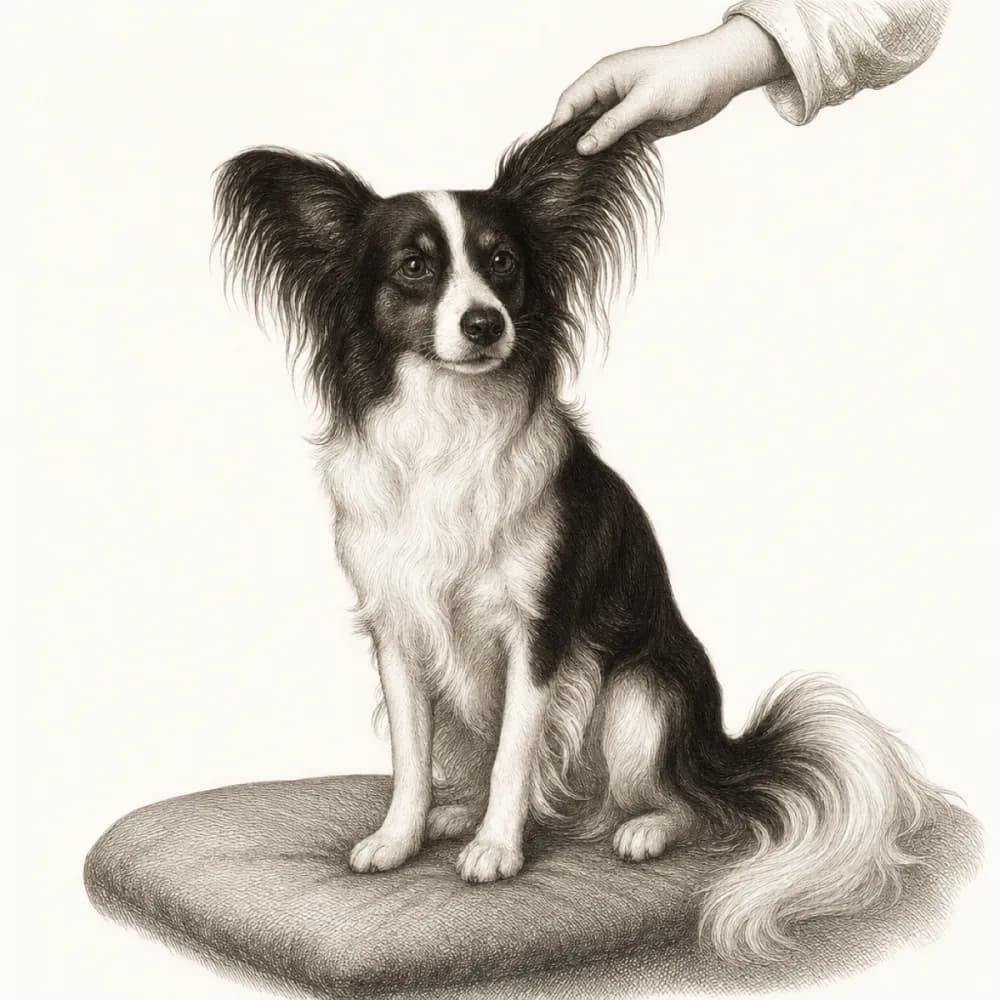
Grooming and bathing
Brushing, nail trims, ear cleaning, baths, and vet handling. These are tasks the dog usually does not enjoy. Most owners use force or treats to push through.
We use a third option: choice. A dog that can leave will, over time, choose to stay.
Why grooming matters
Grooming is the clearest test of trust. There is no fun primary reward. The dog stays because the owner asked, not because food is coming.
A dog that lets you handle its paws, ears, and belly without holding it down is a dog that trusts you. Stage 8 and stage 10 of the test rely on this trust.
Sub-principles
- The dog can stop the session. Always.
- One small step at a time.
- A finished session is short and calm. Not long and complete.
- No food during grooming. Care is the work, not a trade.
Practice steps
Step 1 — Build the place (first week)
- Pick one spot for grooming. A mat, a low table, a corner of the bathroom.
- Lead the dog there. Sit with the dog for two minutes. No tools.
- Stand up. The session is over.
- Do this once a day for a week.
The spot now means quiet time with you, not stress.
Step 2 — Touch without tools (second week)
- In the spot, touch the dog's ears, paws, mouth, belly. One at a time. One second each.
- If the dog moves away, let it. Wait. If the dog comes back within thirty seconds, continue. If not, end the session.
- Build up to ten seconds of touch per area.
Do not hold the dog. If you hold the dog, the dog learns it must escape. We want the dog to learn it can stay.
Step 3 — Show the tools (third week)
- Place the brush, the nail clipper, the ear cleaner on the mat. Do not use them.
- Sit with the dog. Let the dog sniff each tool.
- Pick up a tool. Set it down. Repeat.
- End the session in two to three minutes.
The tools become normal objects.
Step 4 — One stroke, one trim, one drop (fourth week)
- Pick up the brush. Make one stroke. Set it down.
- Pick up the clipper. Trim one nail. Set it down.
- Pick up the cleaner. Put one drop in. Set it down.
- End the session.
A complete brushing or full trim is the goal of month three, not week one.
Step 5 — The pause for permission (second month)
- Before each stroke or trim, pause for two seconds.
- The dog should look at you or stay still. That is permission.
- If the dog moves away, wait. Try again in a minute. Or end the session.
- Permission is the rule. You do not act without it.
Bathing
Bathing follows the same shape.
- Week 1: bring the dog to the tub. No water. Sit with it. Step out.
- Week 2: a damp cloth on one paw. End the session.
- Week 3: a small amount of water on the paws and legs.
- Week 4: a short, warm bath, with pauses to let the dog look at you.
The first real bath should be the easiest one of your life. Not the hardest.
Common mistakes
- Using treats to distract the dog. The dog learns the tool means treats, not safety. When the treats run out, fear returns.
- Finishing the job no matter what. A dog that has been forced once will fight twice as hard next time. End early. Try again tomorrow.
- Holding the dog's body. This teaches the dog to brace and escape. Use the spot and the rule, not your hands.
- Long first sessions. Two minutes is more than enough at the start.
Signs of progress
- The dog walks to the grooming spot when invited.
- The dog stays through a full session without being held.
- The dog lifts a paw or turns its head to help.
- On the test, stages 8 and 10 move from no to yes.
Grooming work continues for the life of the dog. Each new tool starts at step 1.